🏠 Home
›
Dock Accessories
›
Dock Vehicle Restraint
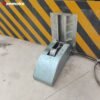
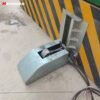
Dock Vehicle Restraint – Hydraulic Rotating Hook Truck Lock
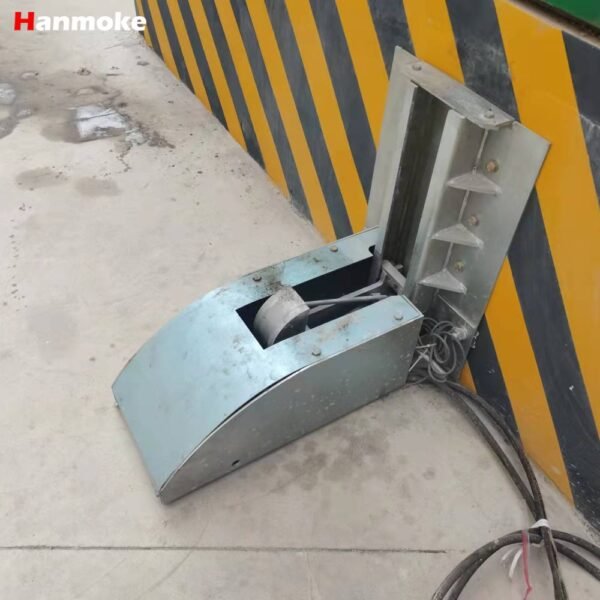
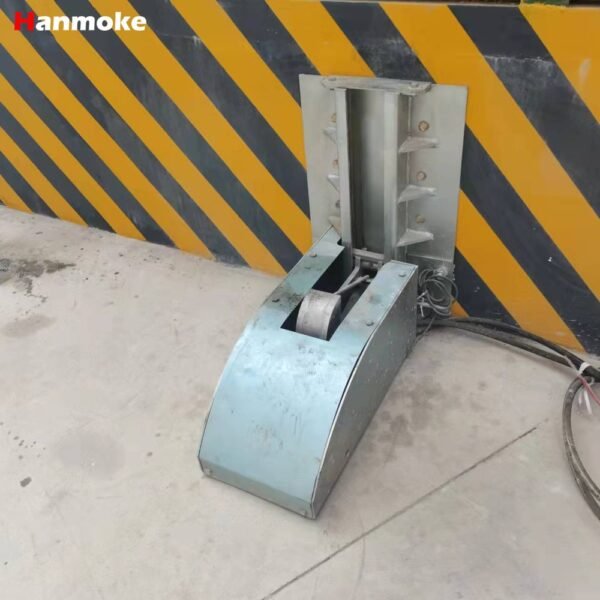
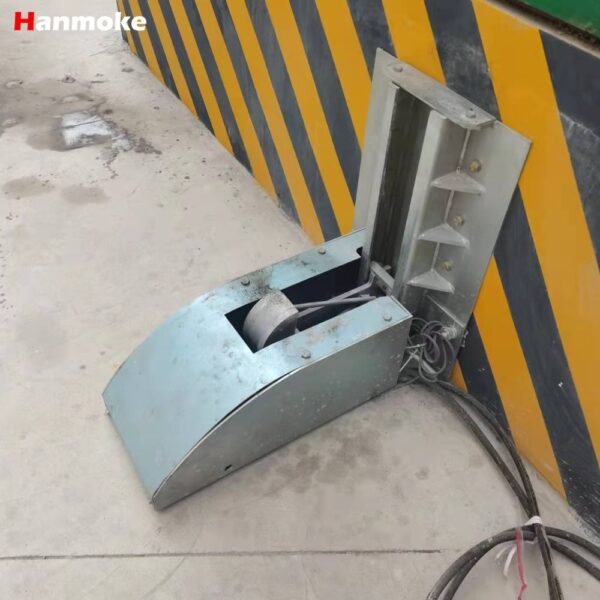
The Dock Vehicle Restraint (truck lock) is a hydraulic rotating-hook restraint face-mounted at the loading dock. When the trailer backs in, the hook rises behind the ICC bar (rear underride guard) and locks the trailer to the dock, preventing premature departure, trailer creep and dock walk while forklifts are crossing. It removes dependence on wheel chocks and driver discipline — the two most common causes of dock accidents.
Activation is hydraulic and interlocked: the restraint, dock leveler and door signals form one sequence — red/green lights tell the driver when it is safe to approach or pull out. The zinc-plated hook mechanism mounts above the bumper line, clear of road spray and impact, and a manual pump allows safe release in a power failure.
Type: rotating hook, hydraulic | Engagement: trailer ICC bar (RIG) | Operation: push-button, interlocked with dock leveler & signals | Mounting: face of dock, above bumpers | Model: HRVR-01
Key Features
- Hydraulic rotating hook – positive engagement behind the trailer underride guard; no springs to fatigue
- Red/green signal integration – inside and outside traffic lights show restraint status at a glance
- Interlock ready – can be sequenced with the dock leveler and dock door so the leveler cannot be used while the truck is unrestrained
- Face-mounted, above bumpers – keeps the working mechanism clear of trailer impact and road dirt
- Zinc-plated hook & arm – corrosion protection for outdoor dock faces
- Manual release – hydraulic hand pump allows controlled release during power failure
- Retrofit installation – mounts on existing dock faces; anchor template supplied
- Works with any trailer – engages standard ICC-bar underride guards (US DOT rear impact guard requirement)
Specifications
| Parameter | Value |
|---|---|
| Type | Rotating hook vehicle restraint, hydraulically actuated |
| Engagement | Trailer rear underride guard (ICC bar / RIG) |
| Activation | Push-button control station; automatic return to parked position |
| Operation pressure | From the dock leveler hydraulic circuit or dedicated power pack; pressure set at commissioning |
| Signals | Interior red/green + exterior red/green LED; interlock logic with dock leveler and door |
| Mounting | Face of dock, above bumper line; anchor bolts into structural concrete |
| Finish | Zinc-plated hook mechanism; painted housing, colour customisable |
| Manual override | Hydraulic hand pump for power-failure release |
| Working temperature | Typical outdoor dock range; cold-store variants on request |
| Standard supply | Restraint body, control station, signal lights, hydraulic connections, anchor set |
Restraint performance depends on trailer configuration, bumper compression and dock structure — final rated holding figures are confirmed on the model datasheet and commissioning report, not pre-assumed. Tell us your trailer fleet mix and we will size the restraint accordingly.
How It Works – Four Steps
- 1. Dock – trailer backs squarely against the bumpers; outside light shows green to guide the driver
- 2. Restrain – the operator presses the button; the hydraulic hook rises and rotates behind the ICC bar; inside light turns green, outside turns red
- 3. Load – forklifts cross the dock leveler; trailer creep and early-departure risk are eliminated
- 4. Release – after loading, the hook parks below bumper level; outside light turns green and the trailer departs
Why Restrain the Trailer?
Trailer creep (gradual separation from the dock as forklifts brake) and early departure are leading causes of forklift fall-through accidents. OSHA’s powered-industrial-truck rules (29 CFR 1910.178) require trucks to be secured before dockboards are crossed, and restraints are the accepted engineering control — no reliance on chocks or memory.
Application Scenarios
Dozens of trailers per shift — interlocked restraint removes the human factor.
Sequenced door/leveler/restraint logic keeps cold air and safety together.
Face-mount installation upgrades existing docks without civil work.
Zinc plating and protected hook position survive shared, hard-used dock faces.
Frequently Asked Questions
What is a dock vehicle restraint?
It is a device that locks the trailer to the dock — typically a hydraulic hook engaging the rear underride guard — so the trailer cannot creep away or depart early while forklifts are crossing between dock and trailer bed.
Does it replace wheel chocks?
Yes, functionally. A restraint is the engineering control; chocks are a manual backup. Most safety programs treat a positive restraint as the primary means of securing the trailer.
Can it work with my existing dock leveler?
Yes. The restraint can run on its own power pack or share the dock leveler’s hydraulic circuit, and the signal lights can be interlocked with your existing control system.
What if the power fails with the truck locked?
A hydraulic hand pump releases the hook in a controlled way, so the trailer can depart safely even during a power failure.
Get in Touch
You may also like: Hydraulic Dock Leveler 10T | Rubber Dock Bumper | Edge of Dock Leveler
🔗 Related Product Categories
评价
目前还没有评价